Is Your Valsalva a Skill Problem, a System Problem, or Both?
If you've read the last few posts in this series, you know the theme by now: for a lot of players, Valsalva is more than a physiological response that can be influenced by playing-related variables.
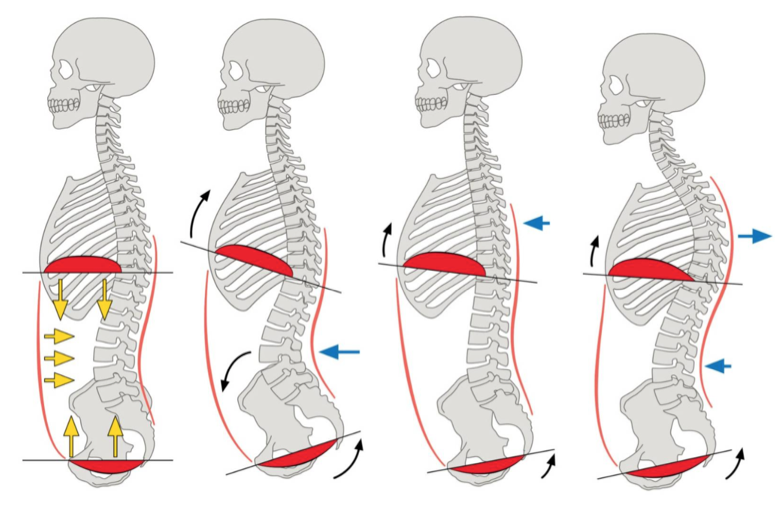
The Valsalva response is heavily influenced by the resting-state pressure pattern of your body. Your body is the foundation, and technique is the house built on top of it. If that foundation is already carrying a high amount of pressure, whether from postural patterns, physical stress, or other factors, the house has to work harder just to stand: your technique now requires more effort just to hold up.
Another way to put it: the more pressure your body holds, the smaller your window to play relaxed and efficiently becomes. Sure, you can find a way to make this work within your current capacity, but it's going to be limited, and as pressure increases, the window will keep narrowing until your body starts to find other ways to manage it. More on that later in this article.
But here's a question I get a lot, and one I should have answered sooner: does that mean every case of Valsalva is a systems problem?
No, not at all!
And learning the difference between this a systems problem and skills problem will help you determine your starting point for intervention and program planning.
Going back through the 67 responses of a recent Valsalva survey I shared across various social media platforms, one theme emerged: Valsalva issues are rarely one problem.
I found that cluster of different players arriving at the same symptom (an attack that won't speak, a throat that locks, a body that braces) through different experiences.
Some of those paths are skill-based, while some are systems-based. Some are both! And a small number aren't really Valsalva at all but present symptoms similar to the stereotypical description of Valsalva.
The Range of Symptoms and Experiences
Before sorting anything into buckets, it's worth just sitting with how varied the "causes" or contributing variables were. Here's a sample of what showed up across the survey, in players' own framing:
Performance pressure and audition stakes. Several respondents pointed directly at high-stakes situations that affected entrances: exposed solos, audition excerpts, and playing unconducted. One respondent traced it straight back to "fear of first notes when not conducted." Another described spending two full years of graduate school building workarounds (air attacks, alternative articulations) just to survive audition rounds.
The awareness loop. One of the more common threads: figuring out what was happening made it harder, not easier. "Becoming aware of it was a double-edged sword," one player wrote. "I figured out what was happening, but now that I knew, I couldn't help but focus on analyzing it more."
A physical trigger that generalized. One trombonist traced their Valsalva back to a very specific origin: gagging against the instrument's resistance early on, which then generalized into a broader hesitation response over time.
Comorbid dystonia. Several respondents described embouchure or focal dystonia alongside their Valsalva symptoms, in some cases explicitly linking the two, in others describing them as separate but overlapping problems.
Medical history. A meaningful minority reported hernias (12%), GERD or acid reflux (27%), pelvic floor dysfunction (28%), or in one case a pacemaker managing vasovagal syncope. They're worth naming because they change what "fixing this" should even mean for that player.
Life stress bleeding into playing. For a subset, the pattern wasn't isolated to the instrument at all. It showed up in daily life, sitting at a desk, exercising, and even trying to relax at the end of the day. One respondent specifically connected it to performance anxiety broadly, not just performance-on-an-instrument anxiety.
A slow undergrad-to-grad drift. Multiple respondents described a pattern that started small in undergrad, went unaddressed, and continued to accumulate by graduate school, one player explicitly noting "no success working through masters" after it developed in undergrad.
Career-ending severity. On the far end, a few respondents described quitting performance entirely, or stopping playing altogether, because of mental associations with their instrument or music.
So after reflection on the responses, there does not appear to be a single cause of Valsalva, nor a single category. Based on this premise alone, this is exactly why a single-lane fix (technique-only, or breathing-only, or body-only) leaves so many players stuck in recovery purgatory.
Skill Problem Vs. a Systems Problem
A skill problem is a coordination, habit, or movement-patterning issue that sits on top of a body that can, in principle, manage pressure.
Pressure management just means the body has the ability to absorb, distribute, and redirect energy, then return to a relaxed baseline before the next demand comes. Think of a shock absorber on a car: it compresses when it hits a bump, then releases and resets. A body that manages pressure well works the same way. It can brace when it needs to, release, and then return to a relaxed baseline before the next demand comes.
Skill problems live atop a system that can adequately manage pressure. Let's talk through a few examples:
Mistimed breathing cadence (finishing the inhale too early and holding, or not leaving enough time to get a full breath before the entrance, or taking a breath too soon and holding until the timing of release)
An attack that was never cleanly taught or learned, so the tongue, air, and buzz are not coordinated together
Reflexively adding more air or more effort after a missed note, rather than adjusting timing or placement
A workaround that's become habit (an air attack, a modified tongue position) that solves the moment but was never actually retrained into a clean attack
Hesitation that shows up in specific, identifiable contexts (a particular register, a particular interval, a particular type of entrance) rather than broadly across playing
A pattern tied to a single origin event (gagging on resistance early on, an equipment change, a specific piece) that hasn't generalized into a whole-body bracing response
Symptoms that resolve or significantly improve with a better cue, a cleaner model, or slow, deliberate practice, and that stay resolved once corrected
Random fundamental problems, such as those above, that periodically appear during the natural process of learning new skills, such as fundamentals, chamber music skills, or repertoire.
A systems problem occurs when the resting state of the ribcage, pelvis, and nervous system is bracing at rest before incorporating an instrument into the equation. There are many variables and signs to consider that point to a systems problem that isn't discussed in traditional pedagogy, such as:
High amounts of resting muscle tension when you are not playing, such as in the abs, neck, jaw, shoulders, lower or upper back, etc
Postural compensations such as forward head, collapsed ribcage, or anterior pelvic tilt)
History of TMJ, jaw, cranium, or neck tension/pain
Feeling throat tension while playing (this could also be a skills problem)
Feeling like you can never inhale full enough, or exhale all the way
Daily stress or anxiety
Difficulty relaxing even when you're trying to (lying down, meditating, after a long day)
A pattern that's gotten progressively worse or spread to more areas over time, rather than staying isolated
Symptoms that improve temporarily with a good cue or a good lesson, then return within days or weeks (potentially - this could be related to learning process, application, and personal integration)
Chronic GI symptoms (bloating, reflux, constipation) or pelvic floor symptoms alongside the breathing and bracing pattern
Where the existing pedagogy lands.
Most of what's actually been written about Valsalva by brass teachers treats it as a skill problem, specifically a timing problem.
One well-known trombone pedagogy blog argues the core issue is that breath and attack become disconnected, and frames it as an argument for whether the coordination of breath and attack causes the maneuver, or the maneuver causes the mistimed coordination, landing on the latter and prescribing a strict "breathe-play" sequence with no pause in between.
A widely circulated article by a professional trombonist takes a related but slightly different angle, describing a momentary hesitation where the tongue locks upward and air pressure builds in the mouth, and recommends a specific warm-up routine as the fix.
An undergraduate research fellowship on the topic frames it similarly, aiming to study the vocal tract mechanics involved in order to build a pedagogical approach to help players work through this problem.
A separate thesis on "the brass player's stutter" ties it more to performance anxiety, describing it as a reaction in which anxiety or hesitation forces the throat into an upward position, rather than as a root cause in itself.
None of these approaches are wrong. For a genuinely skill-driven case, better timing cues, a cleaner breath-play sequence, or a targeted warm-up can be incredibly helpful and might be all someone needs to get back on track and manage their progress.
But notice what all of these have in common:
They treat the moment of the attack as the place where the problem lives and gets solved.
For players whose resting system is already bracing and experiencing high internal pressure, this approach may not be effective, as it does not address the underlying issue: the system.
Mapped against the survey data, here's roughly how the influences above sort:
Skill-based problem:
Mistimed or rushed breathing cadence before an entrance
Under-rehearsed or unrefined attack mechanics
The "more air, more effort" instinct after a missed note
A specific technical origin story (like the gagging-on-resistance example) that hasn't yet generalized into a whole-body pattern
Poor early pedagogy that never established a clean breathe-play sequence, or that taught "support" in a way that encouraged active-bracing rather than airflow
A workaround, like an air attack, that solves the entrance in the moment, but never progresses toward the integration and coordination of the tongue and release.
Etc.
Systems-based problem:
Chronic stiffness or feeling "locked" in posture, reported by 24% of respondents
A constant sense of internal pressure or bracing (47%)
Abs that feel like they're always gripping or "on" (46%)
Neck, upper trap, or TMJ tightness, reported by 71% of respondents in one form or another
Symptoms that show up outside of playing entirely: at rest, during exercise, sitting at a desk
Etc.
Why this distinction actually matters
If your Valsalva is mostly a skill problem, systems-first work isn't going to hurt you, in fact, depending on the approach, it can have a holistic impact on your life, from improved mental health, reduced tension, improved posture, and movement that feels free. However, it doesn't directly address the skill issue and can feel frustratingly indirect when what you actually need is a clearer cue or a cleaner attack model.
If your Valsalva is mostly a systems problem, skill-first work will feel exactly like what several survey respondents described: it works in the lesson but falls apart on your own. Technique adjustments manage the symptom for a while, then the resting pressure reasserts itself and you're back where you started, just with one more layer of compensation on top.
And if you're in the overlap, which the data suggests most players are, doing only one half of the work will get you partway there and then plateau. This is probably the most common frustration I hear: "I've worked on this for years and it's better, but it's never gone." That's often a system that's genuinely improved by sitting underneath a skill layer that was never addressed, or a skill that's been refined by sitting on top of a system that never learned how to downregulate and manage pressure.
To be clear, repatterning into playing is part of the equation no matter which category you're in. Nobody gets to skip the instrument. The question isn't whether technique work happens; it's the order in which it happens.
If you're mostly a skill problem, you can bridge to the instrument almost immediately because the system underneath can already support the work required to repattern or recoordinate your air, embouchure, tongue, and sound.
If you're mostly a systems problem, bridging too early just means you're building a house on a foundation of sand, attempting to repattern and coordinate on top of a body that is producing a high amount of resting tension and internal pressure.
This is why it feels like progress in the room, only to vanish by the next week. Just as with advanced biomechanics and movement compensations, starting conditions determine the order. They don't decide whether the work on the instrument happens.
It's also worth saying these categories aren't fixed. A skill problem left unaddressed long enough tends to become a systems problem: a mistimed cadence or a bad workaround gets rehearsed enough that it becomes patterned and a regular part of your playing. And a systems problem, once the underlying tension and compensation are addressed, can leave behind a skill problem: a body that's now capable of managing pressure well, yet still running an old habit built over years of bracing and never updated. That's usually the last mile of this work, the part that gets missed when someone assumes fixing the system automatically fixes the pattern on top of it.
A quick self-check
Not a diagnosis, just a starting point. Ask yourself:
Do these symptoms only show up on the instrument, in specific high-stakes moments, or does a good cue or a clean model reliably fix it in the moment? That's a learning skill.
Do you notice bracing, gripping, or tension outside of playing too, at rest, during the day, even when you're not thinking about music at all?
That's a systems problem.
Does understanding the mechanism make it worse, not better? That's the awareness loop, and it's a systems-level nervous system response, regardless of how it started. However, this could also be a skill issue categorized as "focus of attention." Had to throw in a tricky one!
Do you have any of the flagged medical history above? That's a conversation to have alongside movement work, not a reason to skip it.
If you're not sure, you're probably not alone. 76% of respondents described their symptoms as moderately limiting or worse, and 73% had been dealing with it for two years or more. That's not a group that hasn't tried to figure this out. It's a group that's been trying to solve the wrong layer, or only one of two layers, for a long time.
Where this leaves you
This is exactly why The Valsalva Method doesn't start with breathing drills or attack mechanics. It starts with figuring out what's actually driving the pattern for you, because the fix for a skill problem and the fix for a system problem look almost nothing alike.
For those who resonate with a systems problem, I have built The Valsalva Method specifically for you, and enrollment is open!
To be direct about who this program is for: it's built for musicians whose Valsalva is a systems problem or who are in the overlap and haven't been able to get past it with skill work (on the instrument) alone.
If you've already been down the technique road, worked with a teacher, adjusted your attack, and tried the breathing cues, and it still hasn't held, that's not a sign you did it wrong; it's a sign you were starting in the wrong place.
The program does include concepts and repatterning work that apply universally across instruments, so bridging back to playing is part of the process, but the core of the work is the systems approach: getting the body to a place where it can actually hold what technique demands.
Enrollment for the founding cohort is open now through September 6, with the cohort starting September 13. Spots are capped between 20 and 25.